地址:廣州市番禺區(qū)番禺大道錦繡香江花園香江集團(tuán)辦公樓
版權(quán)所有 香江集團(tuán)有限公司 Copyright ©2012 粵ICP備05099644號(hào)

 LOCATION:HOME > News Center


Philanthropy in China's First Gilded Age
DATE:2017.08.23 SOURCE:nonprofitquarterly.org
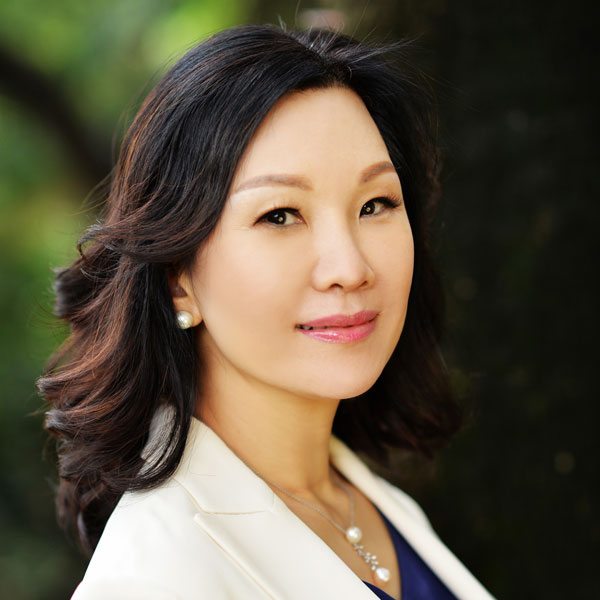
MEI HING CHAK,Photo from Daniel Um(Carnegie Corporation)
Reporting for Devex, “the media platform for the global development community,” Amy Lieberman interviewed Mei Hing Chak(also known as Meiqing Zhai), founder and president of the Heung Kong Group, about her journey in philanthropy. This is part of a six-week Devex series on China’s “expanding role in aid and development across the globe.”
The Heung Kong Group is a conglomerate founded in 1990 that engages in furniture retailing and logistics, real estate development, commercial construction, natural resources, education, healthcare, and finance. In 2005, the Heung Kong Group initiated the first (but not the largest) non-publicly sourced charitable foundation in China—the Heung Kong Charitable Foundation. The company prominently references “the Foundation” on its homepage and proudly notes “it is numbered 001 by the Ministry of Civil Affairs of the People’s Republic of China.” The Foundation primarily supports emergency disaster relief, education, and health services in China.
Among her many titles and awards, Mei Hing Chak is a member of the National Committee of the Chinese People’s Political Consultative Conference (CPPCC), China’s top political advisory body. She is one of nine recent winners of the Medal of Philanthropy, awarded by the Carnegie Foundation every two years. The 22 Carnegie institutions in the United States and Europe nominate the medalists, and a selection committee makes the final selection. The medals will be awarded to the honorees at The New York Public Library’s Stephen A. Schwarzman Building on October 3, 2017.
NPQ has long watched the rise of civil society in China, some of its largest benefactors, philanthropy conferences, and China’s Charity Law.
Mei Hing Chak described China as being unequal economically, particularly in the country’s rural regions. Taking a page from Carnegie’s story, one of the Foundation’s priorities is to build libraries. They have established 1,000 “centers and libraries” throughout China to date.
We were the first foundation established in China in 2005. Before that, there were no private foundations. Currently there are already 3,980 non-public charitable foundations in China, which occupy 72 percent of all the foundations in the country. In 2006 there were only around $10 billion in donations. But in 2015, the donations reached $125.5 billion, meaning there is a 12 times growth in just 10 years. There are more and more people who are aware of helping others, and more and more people who are aware of the action of philanthropy. The charity law [a regulatory framework for nonprofits, which went into effect in early 2017] encourages people more to notice charitable issues and social issues and to give more.
Another priority for Mei Hing Chak is to influence China’s young people to get involved in philanthropy. That is a worthy goal, inasmuch as China’s philanthropic potential is massive. China has 319 billionaires, second only to the United States’ 565. China has the most new billionaires. According to this 2016 Credit Suisse Global Wealth Report, China now has 1.6 million millionaires and more residents with wealth above $50 million than any country except the United States. Wealth per adult has grown in China, rising from $5,670 to $22,864 between 2000 and 2016. Nevertheless, charitable giving in China as a percentage of China’s GDP is 0.1 percent, compared to two percent in the U.S. The next generation is obviously a key to the growth of philanthropy in China.
In “The Gospel of Wealth,” Andrew Carnegie wrote in 1889, “The contrast between the palace of the millionaire and the cottage of the laborer with us today measures the change which has come with civilization. This change, however, is not to be deplored, but welcomed as highly beneficial.” Carnegie held that public giving benefiting the masses is “more valuable to them than if scattered among them through the course of many years of trifling amounts.”
As China enters into its first Gilded Age, philanthropists there may do well to also invest in professionalizing the governance and management processes of Chinese social organizations, to help create the country’s first independent sector. China may one day give rise to its own NPQ, a sometimes strident voice that is never comfortable with any “Gospel of Wealth” that dictates what is best for the masses, whether it is “public giving” or “trifling amounts.”—Jim Schaffer
The founders of Covenant House, AmeriCares, TechnoServe and the Hole in the Wall Gang Camp were my mentors who entrusted me with much. What I can offer the readers of NPQ is carried out in gratitude to them and to the many causes I’ve had the privilege to serve through the years.
Devex is the media platform for the global development community. A social enterprise, we connect and inform 850,000+ development, health, humanitarian, and sustainability professionals through news, business intelligence, and funding & career opportunities so you can do more good for more people.